
Flat consumer unit: compliance upgrade and replacement
Many flats still have old consumer units that do not comply with current standards. Elecprium carries out replacements and brings your installation up to date to ensure your safety.
Why renovate the consumer unit in your flat?
Flats built before 1990 are often fitted with:
- Cartridge fuse holders without RCD protection
- Aluminium wiring or insufficient cable cross-sections
- Absence of an earth conductor on certain sockets
- An undersized unit for modern usage
Specific constraints in a flat
- Limited space: the unit must be compact and well organised
- Co-ownership: coordination with the managing agent for work on common parts
- Subscribed power: often limited (6 to 9 kVA), requiring precise sizing
- Disruption: rapid intervention to minimise inconvenience to neighbours
Our intervention
- Diagnosis of the existing installation
- Design of the new unit adapted to the floor area and usage
- Replacement of the unit with compliant equipment
- Installation of mandatory RCD protection
- Clear labelling of all circuits
- Consuel compliance certificate if required
What NFC 15-100 requires for a flat
- A minimum of 2 × 30 mA RCDs (type A and type AC)
- A dedicated circuit for each large appliance (washing machine, oven, hob)
- A minimum number of sockets and lighting points per room
- A domestic technical riser (GTL) grouping all incoming supplies
Case study 1: complete consumer unit renovation in a flat
A consumer unit isn't fixed in time: it ages, and above all it needs to keep pace with the work and new appliances installed in the home over the years. Here's a real Elecprium job on a unit that had become both faulty and no longer suited to the flat's actual usage.
The initial diagnosis
Two separate problems had built up on this installation:
- The utility company's main breaker (the one that protects the whole installation upstream of the consumer unit) had a test button that no longer worked. This button isn't a minor detail: it's what lets you verify that the RCD protection actually works. A faulty test button is a genuine cause for concern.
- Several circuit breakers in the unit no longer matched the appliances they were protecting. Over the course of work carried out in the flat since the original installation, circuits had been modified without the breaker ratings being updated to match, which can cause nuisance tripping or, worse, insufficient protection.
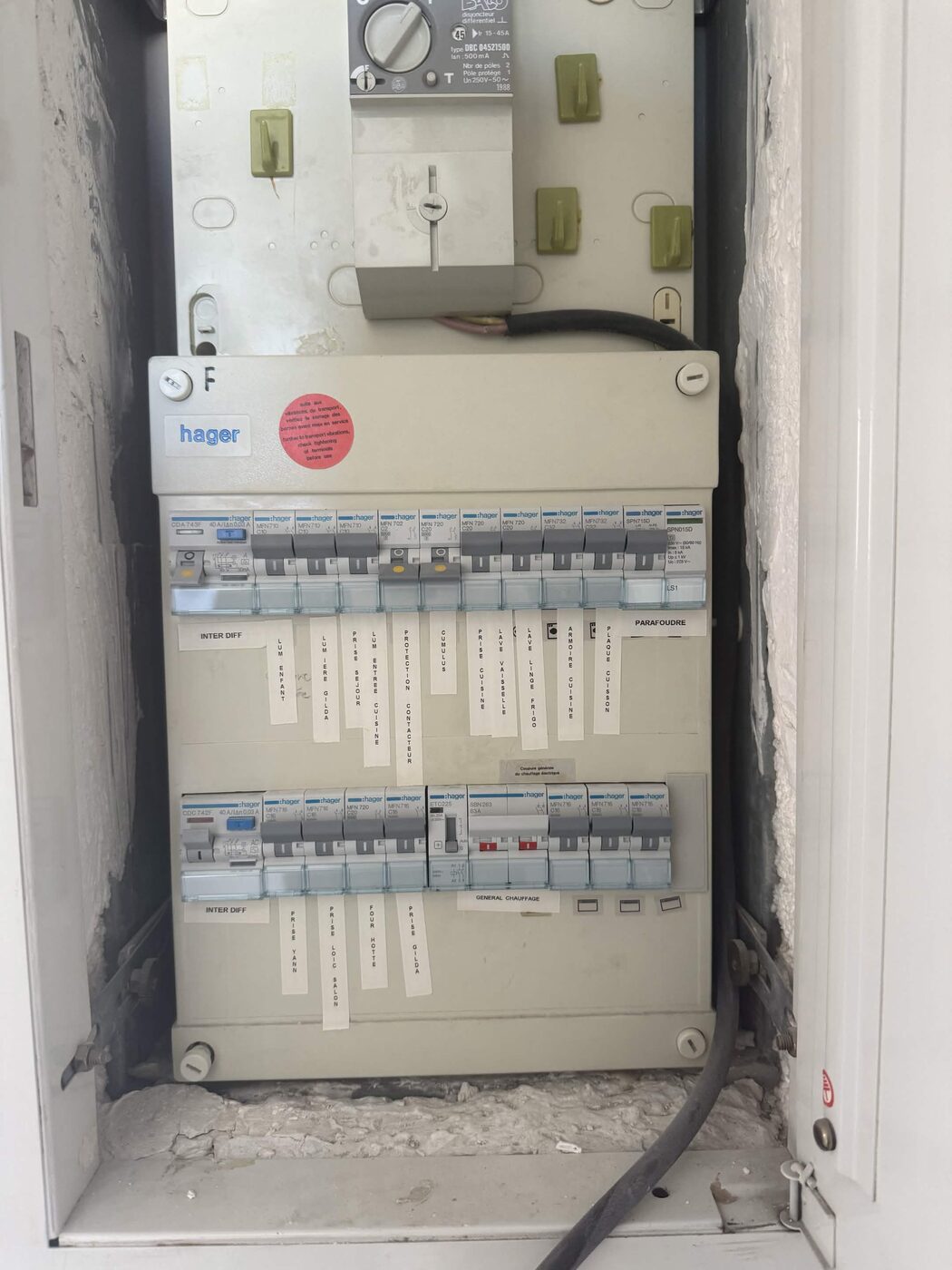
Step 1: replacing the utility company's main breaker
The main breaker belongs to Enedis (the electricity network operator), not to the homeowner. Good news: for an emergency such as a faulty test button, Enedis carries out the replacement free of charge, usually within 48 hours. All that's needed is to report the fault, with no cost to advance for this specific replacement.
We coordinated this step with the rest of the work, so that the replacement of the Enedis breaker and the renovation of the rest of the unit could follow on without multiplying power cuts for the occupants.
Step 2: replacing the circuit breakers
This is the core of the job. We went through every breaker in the unit to re-rate them according to the power actually drawn by each circuit today: hob, oven, dishwasher, lighting, sockets per room. A poorly rated breaker is either too sensitive (it trips for no reason) or not protective enough (it fails to trip when it should): neither is acceptable.
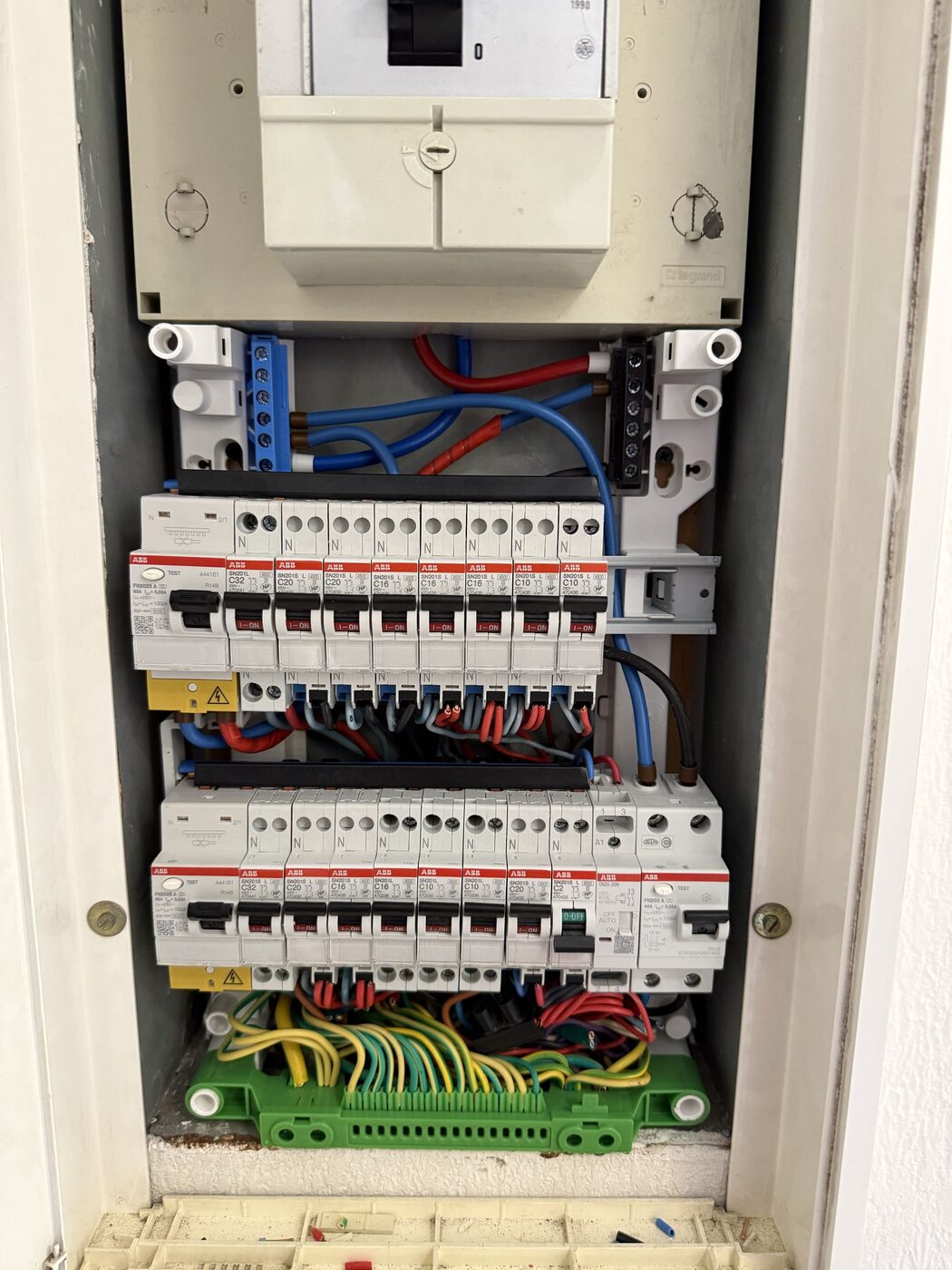
We chose ABB brand RCDs and circuit breakers, sized circuit by circuit, with the mandatory 30 mA RCD protection spread across the unit's two rows.
Step 3: clear labelling of every circuit
A well-wired unit without labels is still a headache for occupants. The final step involved precisely naming every breaker and RCD: main, hob, oven, dishwasher, fridge, microwave/extractor hood, kitchen sockets, kitchen light/MVHR, living room air conditioning, and so on for the second row (bedroom, hall, corridor, bathroom, washing machine, hot water...).
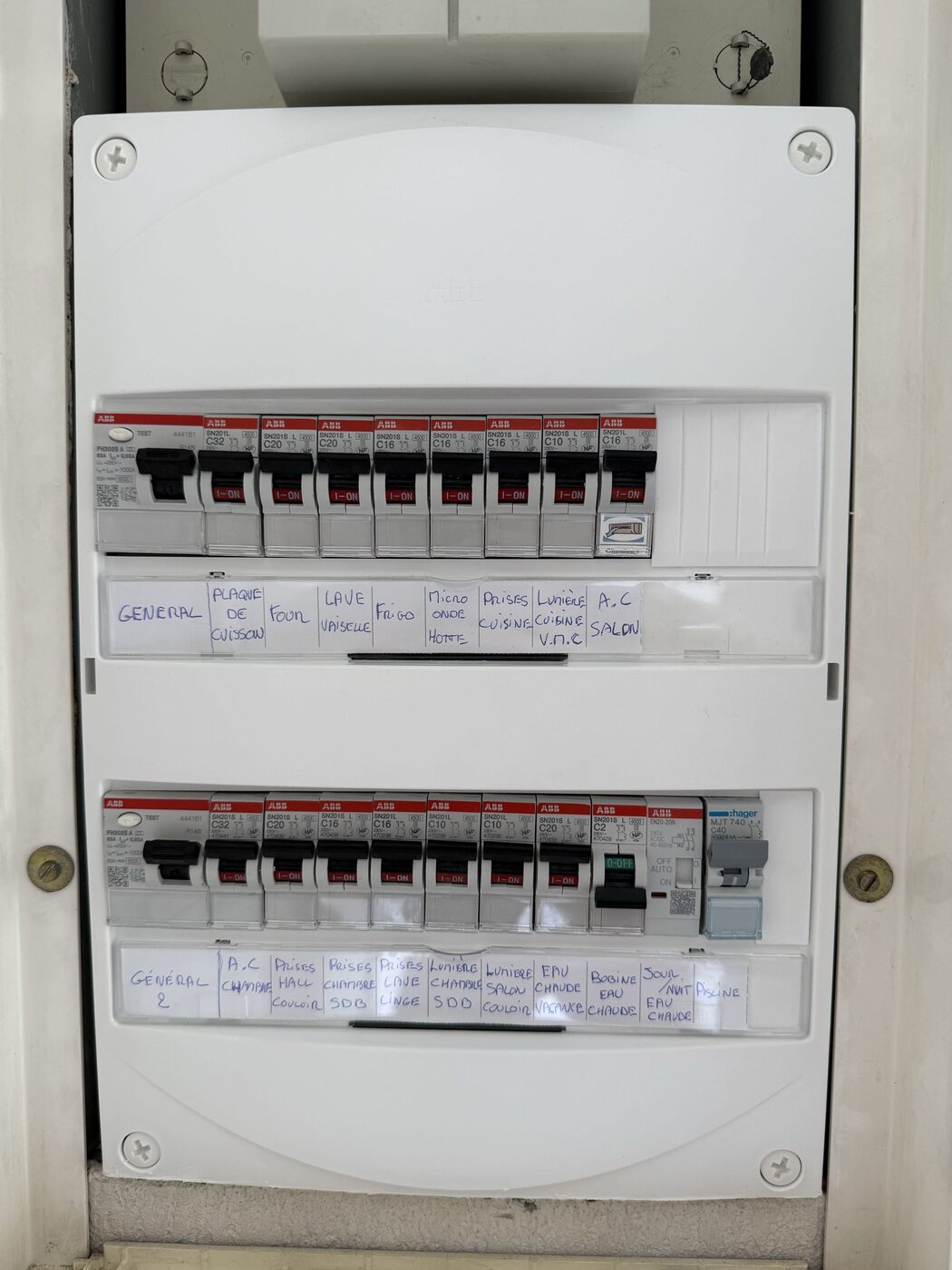
The result: in the event of a power cut or the need for future work, occupants know immediately which breaker to switch, without having to cut power to the whole flat to find the right one.
Many consumer unit renovations stop at replacing the equipment, without taking the time to label it properly. Yet this is what makes the difference day to day: in the event of a fault, you switch off the right circuit within seconds; when selling or letting, a clearly labelled unit reassures and adds value to the property.
Case study 2: complete relocation of a consumer unit in Monaco (SMEG)
Some renovations go well beyond simply replacing equipment. Here's a job carried out in Monaco, where the original consumer unit was installed inside a cupboard, making it hard to access for maintenance as well as for an emergency callout. The decision was made to take it out of the cupboard entirely and remount it outside, in the hallway.
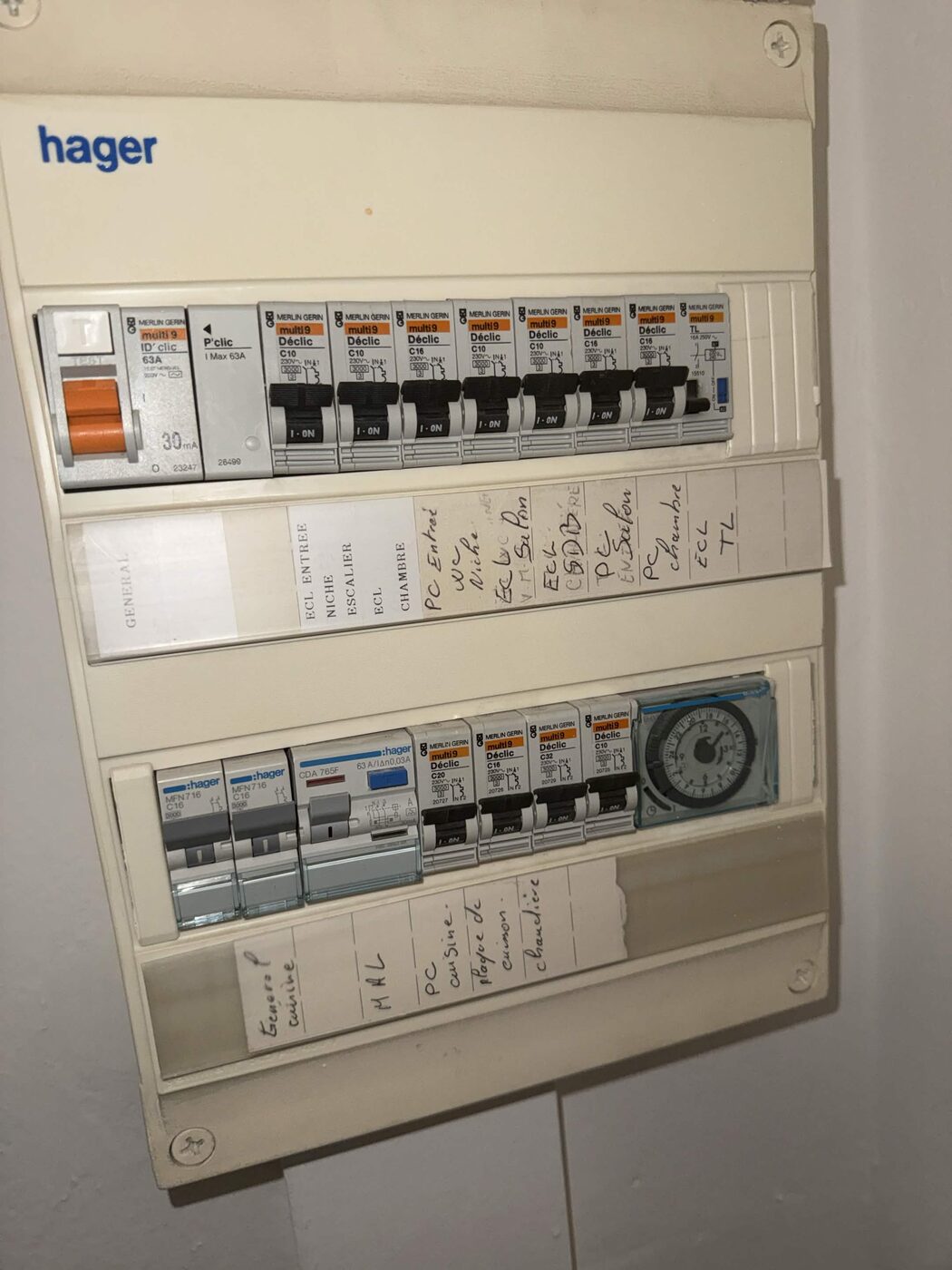
A local peculiarity: SMEG, not Enedis
In Monaco, electricity is not distributed by Enedis but by SMEG (Société Monégasque d'Électricité et du Gaz). Unlike a job in France, where the main breaker remains the property of Enedis and where Enedis can carry out its replacement free of charge, in Monaco it's the electrician who installs the main breaker directly, under SMEG's supervision. This difference completely changes how the job is organised.
Step 1: appointment with SMEG to cut the supply
Before any work on the main breaker, a first appointment with SMEG is required to have the flat's supply cut from outside the building. This is an essential condition for working safely on this part of the installation, which remains the distributor's responsibility even though it's the electrician who handles it.
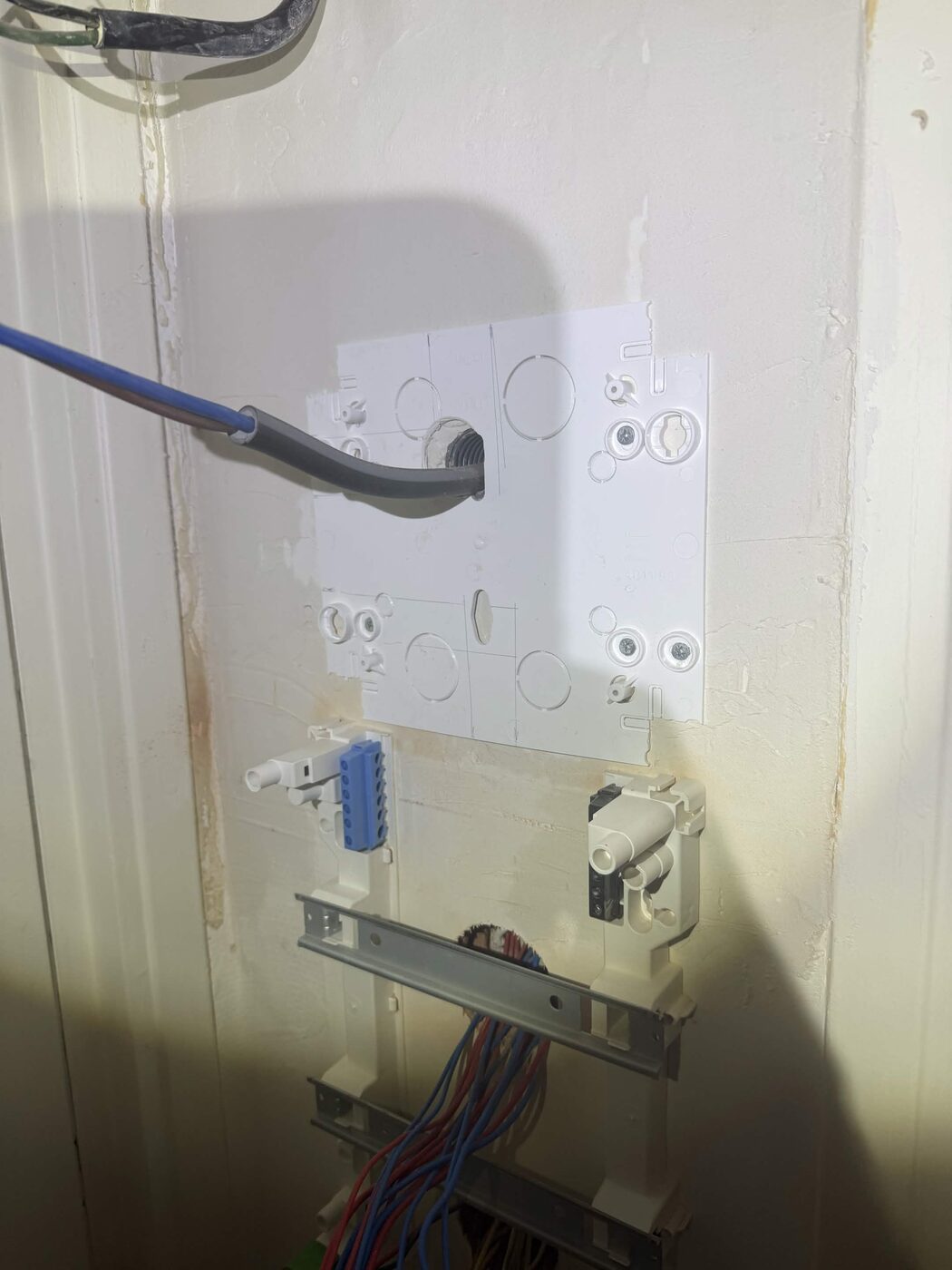
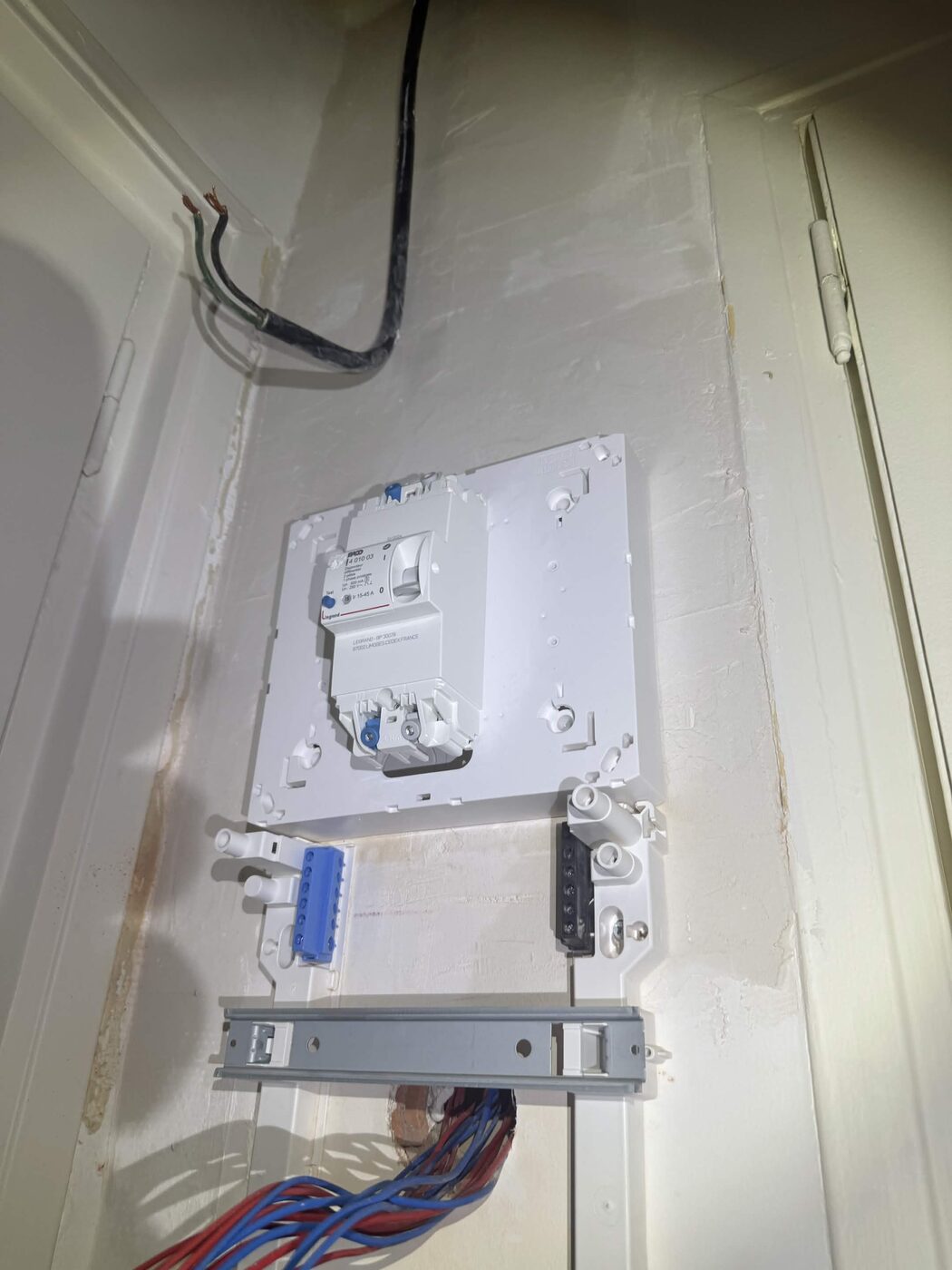
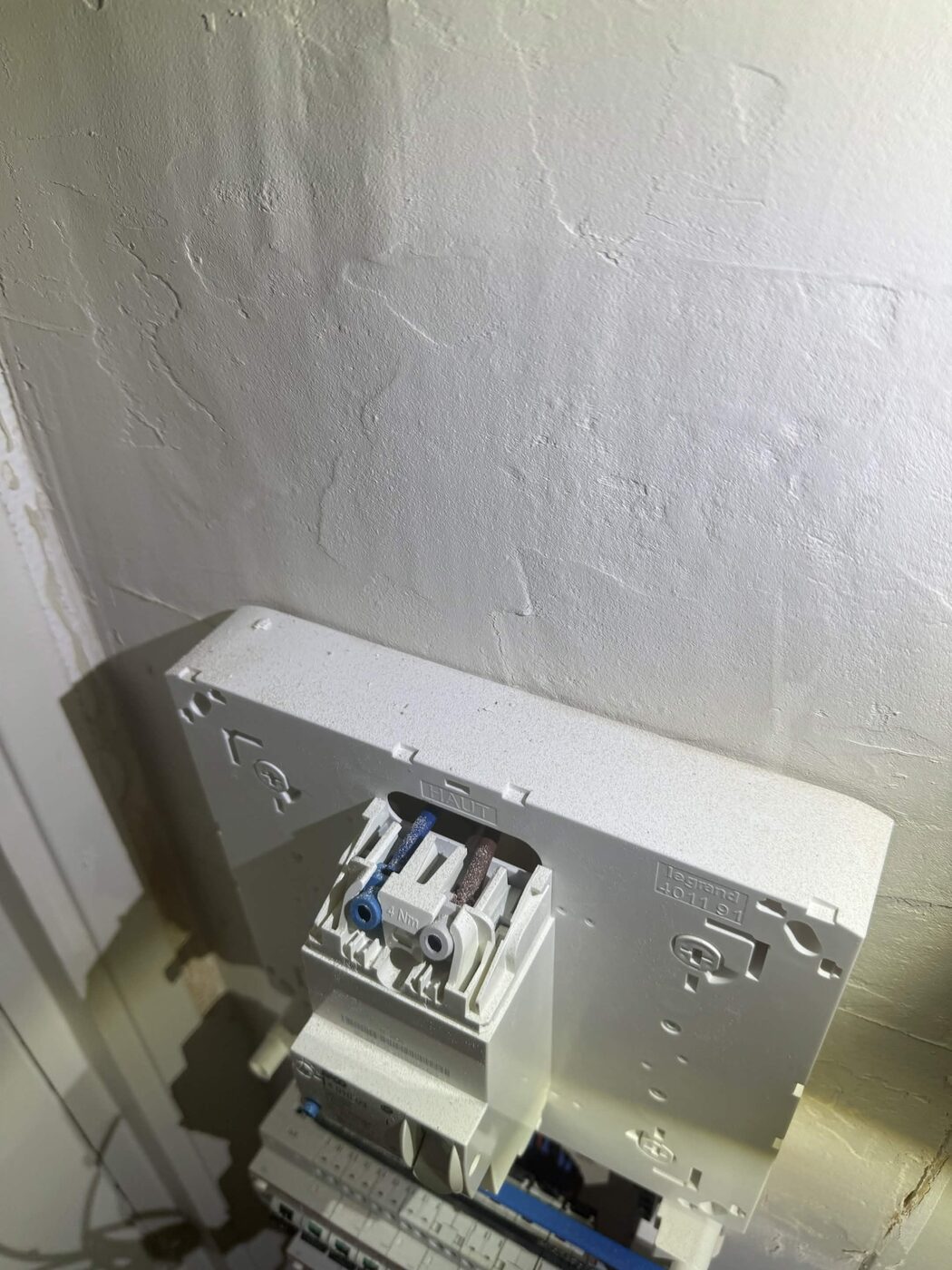
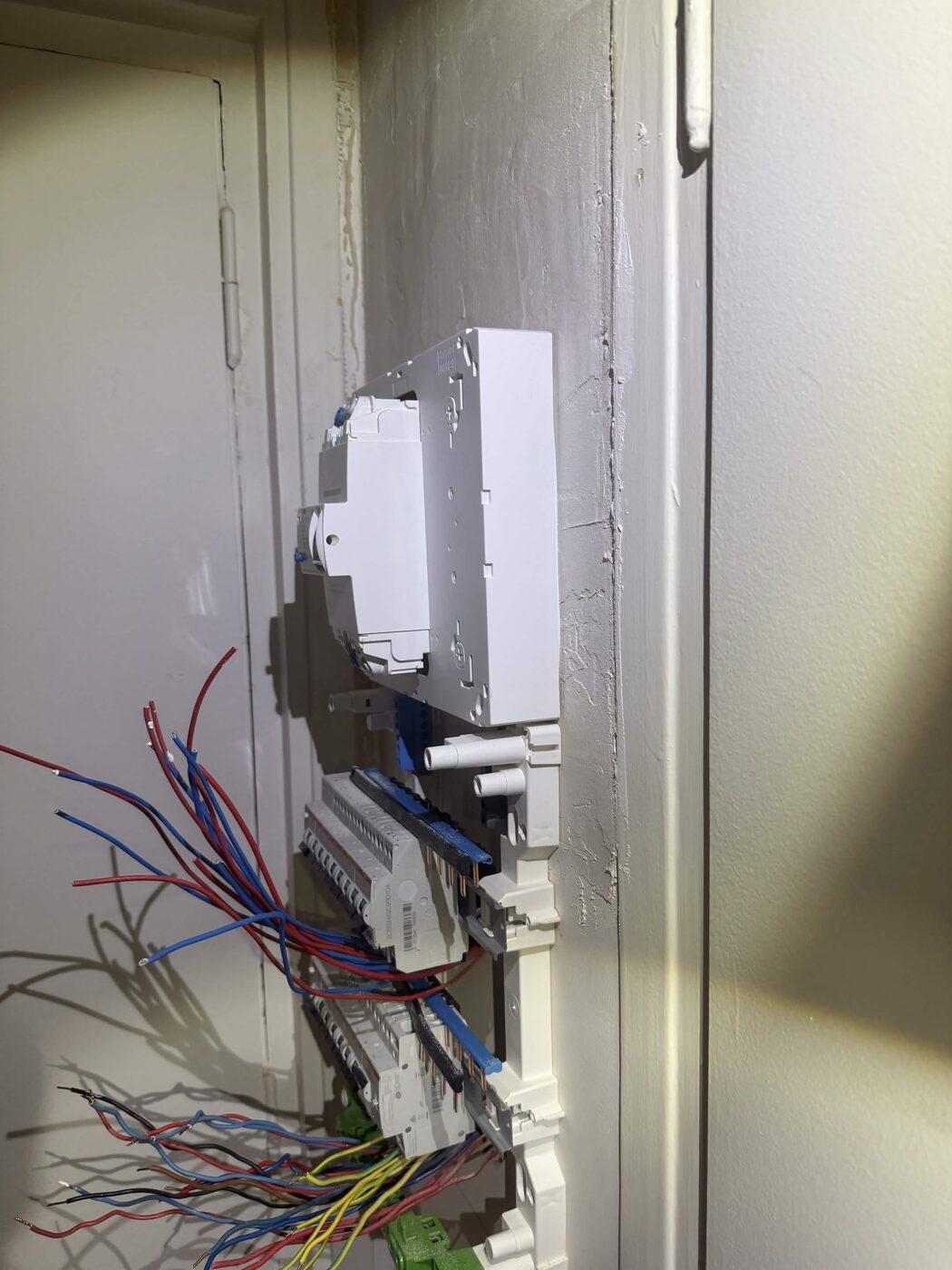
Step 2: relocating the unit and the main breaker, three separate conduit runs
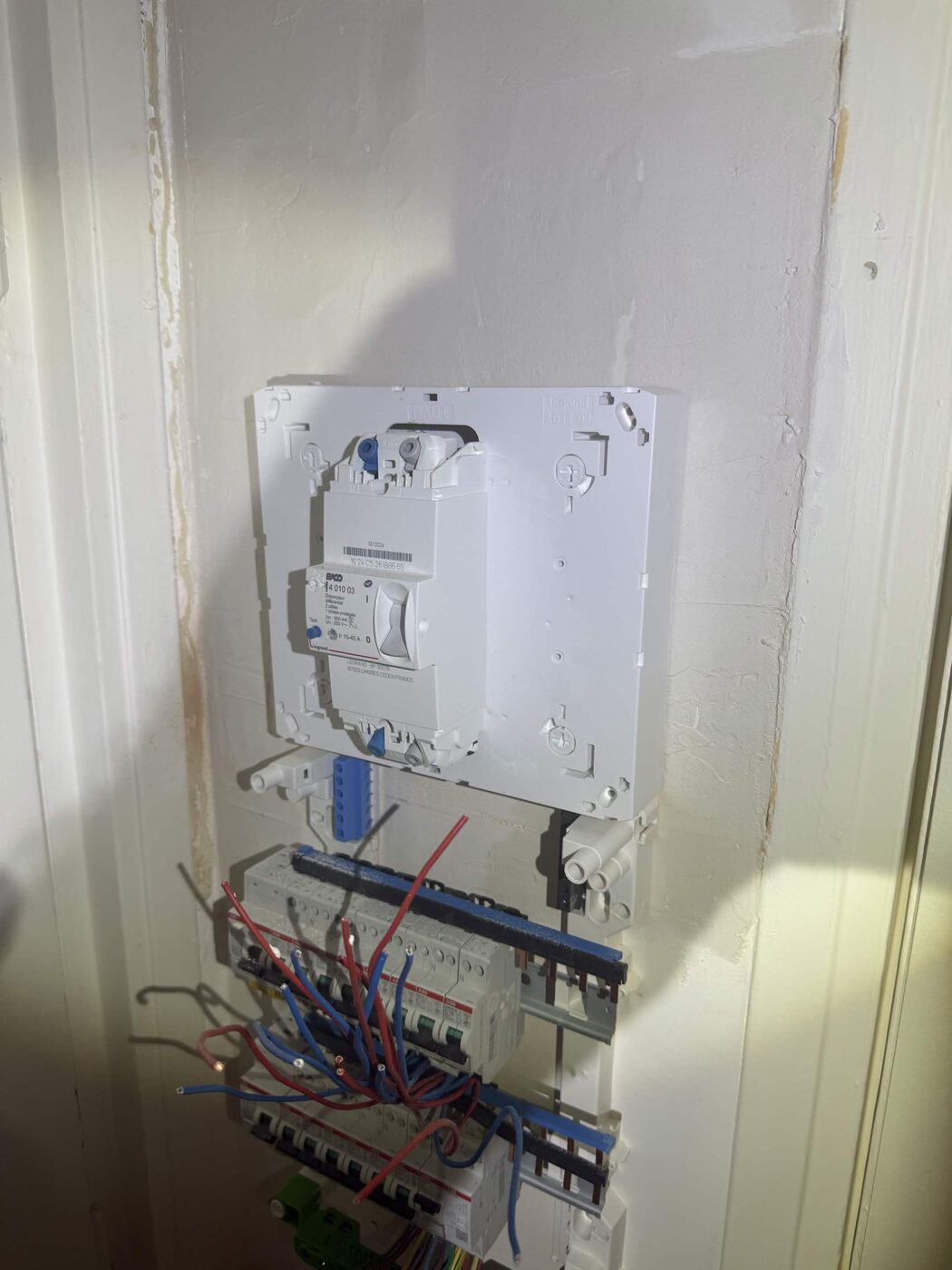
Once the supply was cut, the consumer unit and the main breaker were taken out of the cupboard to be remounted outside, on the hallway wall. This relocation required three separate conduit runs, each with its own purpose:
- A 40 mm diameter conduit for the main supply (live and neutral) coming from SMEG's main breaker
- A 20 mm diameter conduit, kept separate from the previous one, dedicated exclusively to the earth conductor — it must never share its conduit with the electrical supply
- A third run for all the cables serving the flat's appliances, lights, switches and sockets
Step 3: second SMEG appointment and sign-off
Once the main breaker was remounted in its new position, a second appointment with SMEG was required: their technician checks the installation's compliance before signing it off. This sign-off is what allows power to be restored to the flat and work to continue on the rest of the unit.
Step 4: RCDs, circuit breakers and labelling
With power restored, the installation of the RCDs and circuit breakers could be completed, sized according to the appliances actually present in the flat. Each breaker was then labelled to remain easily identifiable.
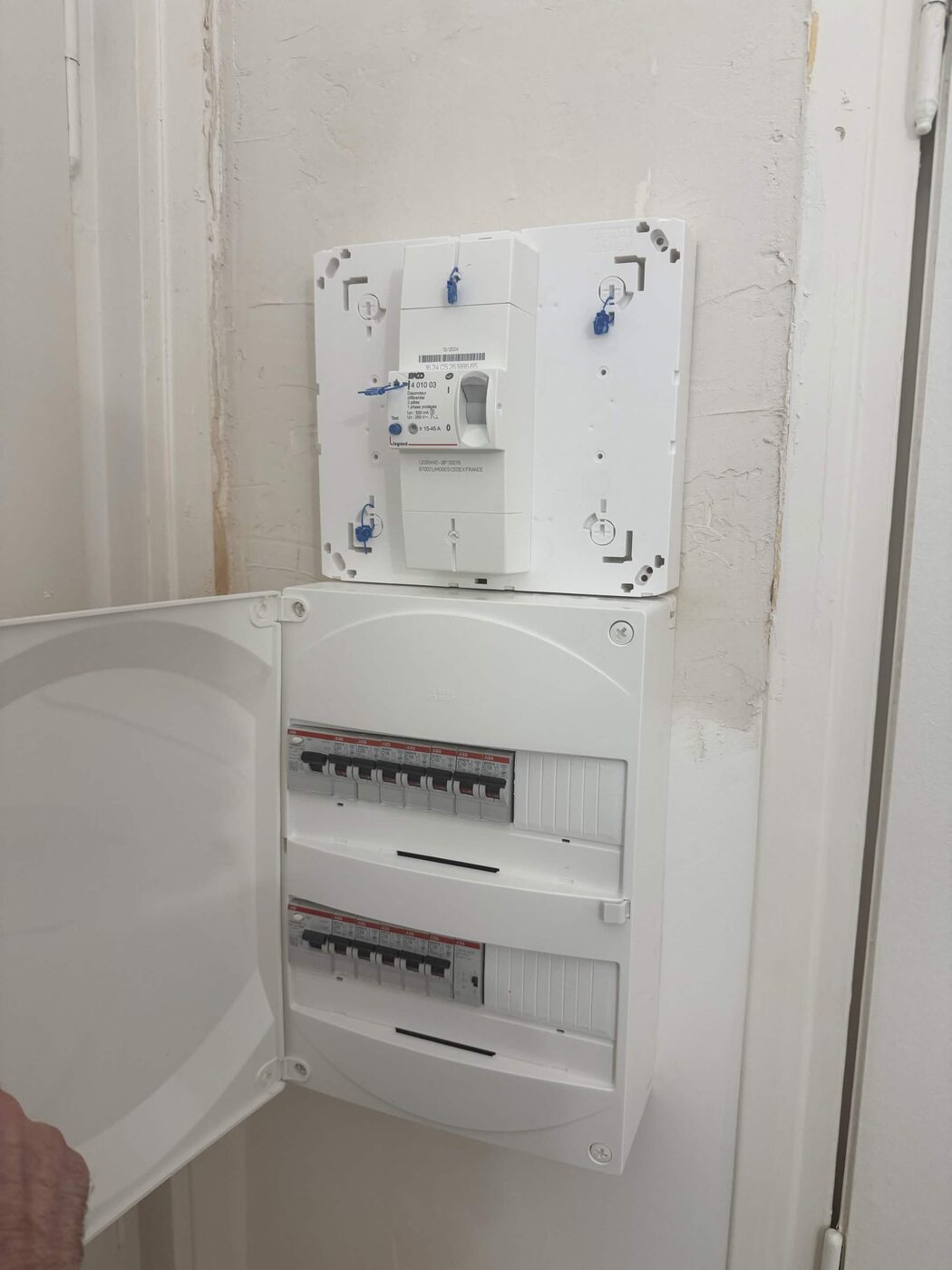
At the client's request, a door was fitted to the unit once the job was finished — an aesthetic choice, not a regulatory requirement, but one that gives a neat, discreet finish in the flat's hallway.
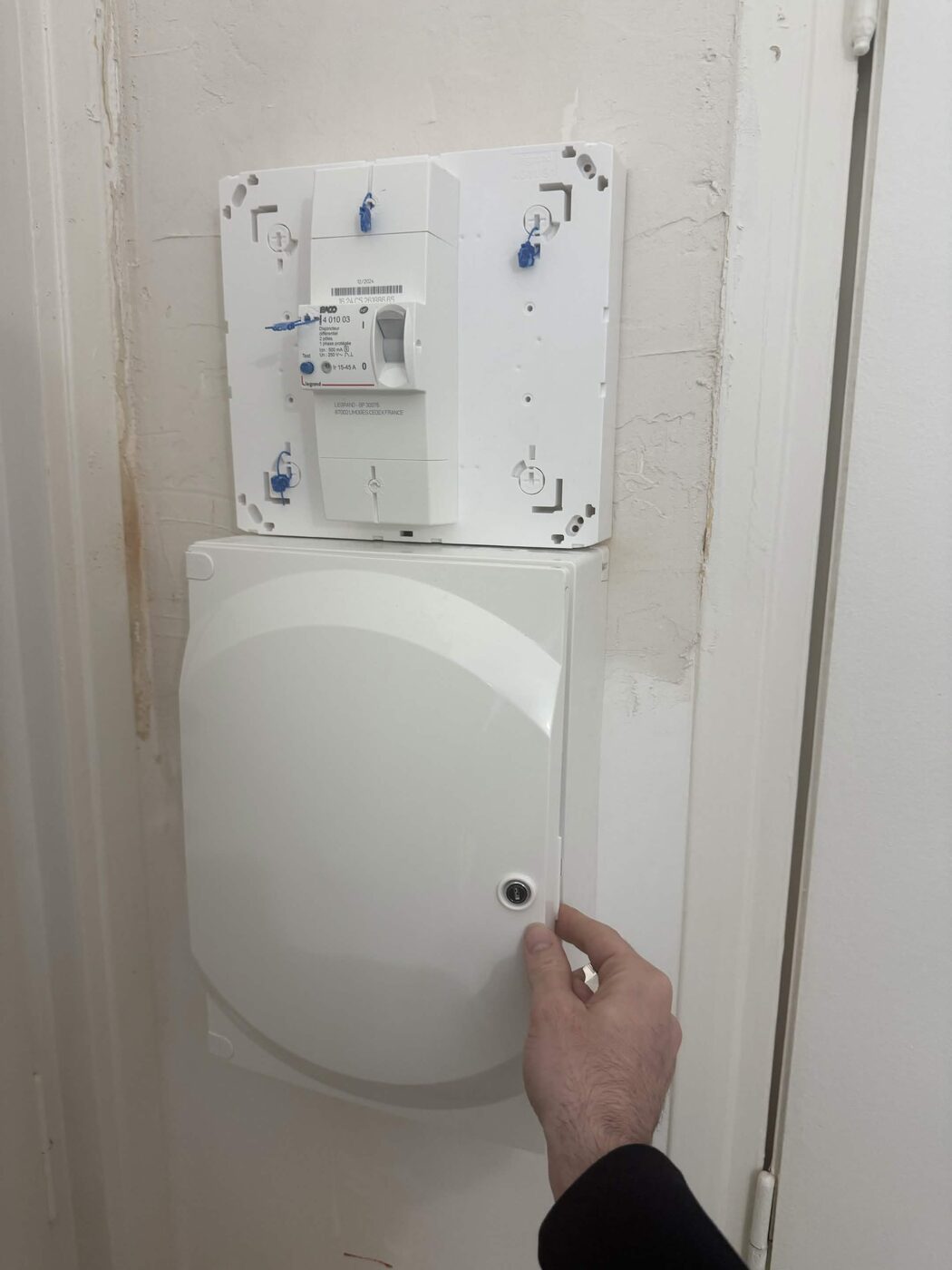
This job is a good illustration that a consumer unit renovation isn't always limited to replacing equipment: rethinking the unit's location to make it accessible, and working around local administrative specifics (here SMEG rather than Enedis), is very much part of the job.
For any questions or additional information, you can reach us at 06 95 62 24 33, Monday to Friday from 9am to 6pm. Outside these hours, this line is reserved for emergencies, available 24/7.